How to Close an Interview and Write a Follow-Up Email
 5 min read
TL;DR
The last two minutes of an interview and one short email afterward can strengthen your impression. Close with thanks, one line of interest, and a question about next steps; then send a thank-you email within 24 hours.
Key takeaways
- A good close has thanks, one reason for your interest, and a next-steps question.
- Ask politely about the timeline so you know when to follow up.
- A thank-you email should be short, specific, and sent within 24 hours.
- Send a follow-up only after the timeline the interviewer gave has passed.
- Don't add new claims in an email that you didn't make in the interview.
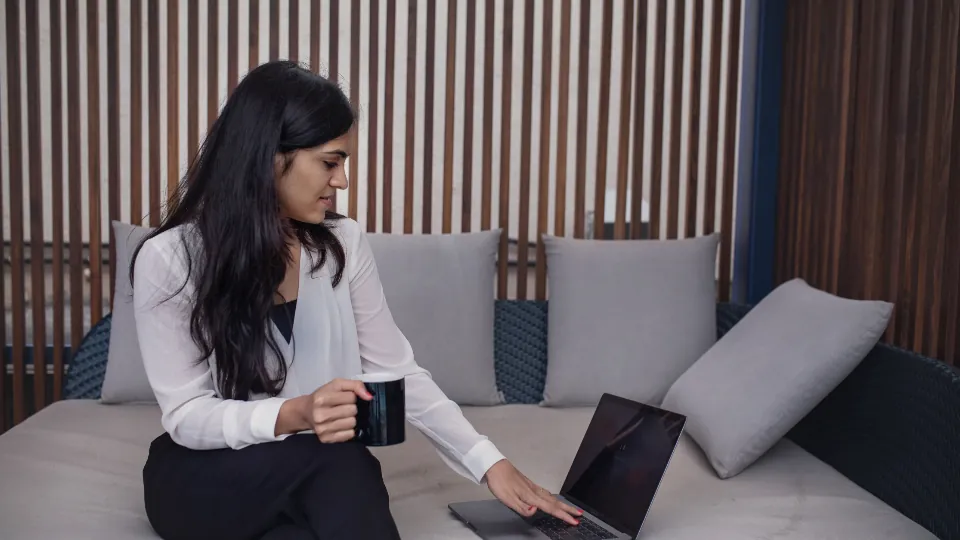
Photo: Burst / StockSnap (CC0)
Table of contents
The interview is nearly over. The interviewer asks, "Do you have any questions for us?" You ask one or two things. Then they say, "Great, thanks for your time today." And you're not sure what to say besides "Thank you." The call ends awkwardly.
The closing is often skipped during preparation, even though the last impression tends to stick. The same goes for the email afterward. Many candidates don't send one at all, or send a long, stiff message. This article covers closing phrases you can use, how to ask about next steps, and English templates for a thank-you email and a follow-up.
The structure of a good close
An effective close doesn't need to be long. Three parts, in 20–30 seconds:
- Thanks. For their time and the conversation.
- One line of interest. Why you're still (or even more) interested after this conversation. Mention one specific thing from the call.
- A question about next steps. So you know what happens and when.
For example:
Thank you for your time today. I enjoyed our talk.
Hearing about the new mobile app made me more interested.
What are the next steps in the process?
The second line is the one people skip most, and it's what makes your close different from other candidates'. Mention something that actually came up: a project, a team challenge, or how they work.
Last questions before you close
Before the close, the interviewer usually invites your questions. Good options are in questions to ask the interviewer. For this final stretch, two practical questions are almost always useful:
What does the timeline look like for a decision?
Is there anything else I can send you that would help?
The first gives you a reference point for when to follow up. The second opens the door to sending a portfolio, a code sample, or a project link you didn't get to show.
There's also a bolder question you can use when the mood is relaxed:
Is there anything in my background you'd like me to clarify?
It gives you a chance to address doubts before the call ends. If the interviewer mentions something, answer honestly and briefly. If it's something you haven't done, use the pattern from honest answers when you haven't done it.
Closing lines for different situations
A regular job interview
Thanks again. I look forward to hearing from you.
Have a great rest of your day.
Across time zones
Thanks for making time, especially with the time difference.
Enjoy the rest of your morning.
A call with a potential freelance client
Thanks for walking me through the project.
I'll send a short summary and a proposal by Friday.
With freelance clients, a concrete follow-up promise (what and when) shows you're reliable. Make sure the deadline is realistic, then keep it.
When the interview didn't go smoothly
Thank you for your patience today.
I'm still very interested in this role.
Don't dwell on what you think went wrong. Close calmly and positively.
Thank-you email template
Send it within 24 hours, to the interviewer directly or to the recruiter who scheduled the call. Four to six sentences is enough.
Subject: Thank you – [Role] interview

Hi [Name],

Thank you for talking with me today about the [Role] role.
I enjoyed learning about [one specific thing from the interview].
It made me even more interested in joining the team.
[Optional: one relevant extra line, such as a portfolio link you promised.]

I look forward to hearing about the next steps.

Best regards,
[Your name]
A filled-in example:
Subject: Thank you – Backend Developer interview

Hi Sarah,

Thank you for talking with me today about the Backend Developer role.
I enjoyed learning about your plan to move the payment service to Go.
It made me even more interested in joining the team.
As promised, here is the link to my order API project on GitHub.

I look forward to hearing about the next steps.

Best regards,
Rizky
Notice that the email doesn't repeat the whole interview or add new claims. It contains thanks, one specific detail, and what was promised.
Follow-up email template
If the timeline they gave has passed with no news, wait one or two business days, then send a short follow-up. If no timeline was mentioned, about a week after the interview is usually reasonable.
Subject: Following up – [Role] interview

Hi [Name],

I hope you're doing well.
I'm following up on my interview for the [Role] role on [date].
I'm still very interested in the position.
Is there any update on the timeline?

Thank you,
[Your name]
One follow-up is enough. If there's still no answer, you can send one more after a while, but never daily. Meanwhile, keep other applications moving.
If the answer is a rejection
A rejection still deserves a short reply. A polite answer keeps the relationship open, and some companies reach out again to candidates who left a good impression when another role opens.
Hi [Name],

Thank you for letting me know.
I enjoyed learning about the team.
If you have any feedback for me, I'd be glad to hear it.
I hope we can work together in the future.

Best regards,
[Your name]
If they share feedback, write it down and use it to prepare for your next interview.
Common mistakes
- Closing with just "Thank you, bye." Not wrong, but you miss a chance to leave a good impression.
- Asking "Did I get the job?" It puts the interviewer in an awkward spot. Ask about next steps, not the outcome.
- Long emails. A three-paragraph email repeating every answer rarely gets read in full. Short and specific works better.
- Generic emails. "Thank you for the opportunity. I am very interested." with no detail feels like a mass template. Mention one thing from the conversation.
- Adding new claims by email. "I forgot to mention I'm also an expert in AWS." If that doesn't match your real experience, don't write it. If it's true, keep it proportional: "I also have some experience with AWS, mainly S3 and EC2."
- Misspelling names. Check the interviewer's name and the company name before you hit send.
Closing and follow-up checklist
- One thank-you line and one specific line of interest ready.
- Ask about next steps and the timeline.
- Note the interviewer's name and one specific detail right after the call.
- Send a thank-you email within 24 hours.
- Include anything you promised, such as a portfolio link.
- Set a reminder for the follow-up date, based on the timeline they gave.
Summary
A good close needs just thanks, one specific reason for your interest, and a question about next steps. Afterward, send a short thank-you email within 24 hours, and follow up once if the timeline passes. Stay honest in every message: an email is not the place to add claims you didn't make in the interview.
Repartee's recap feature keeps a history of the questions and answers from your interview session. Those notes make it easier to recall the specific detail to mention in your thank-you email.
Related articles
 Remote & Freelance
6 min read
Interviewing for Remote Jobs Abroad: A Practical Guide
How to handle a remote job interview with a foreign company: time zones, written communication, working on your own, and short English answers.
 Communication
6 min read
Questions to Ask the Interviewer in English: 20+ Examples
Good questions to ask the interviewer at the end of an English interview, grouped by topic, plus how to ask them smoothly and which ones to avoid.
 Remote & Freelance
6 min read
Freelance Client Calls: How to Handle Them in English
A guide to freelance client calls in English: understanding the need, showing relevant work, talking scope and price, and sending a written recap.