Solo Speaking Practice for English Job Interviews
 6 min read
TL;DR
You don't need a partner to practice speaking for interviews. With a phone to record yourself, a list of questions, and your real stories, 20 minutes a day can make your answers much smoother within a few weeks.
Key takeaways
- Speaking practice must be out loud; reading silently isn't enough.
- Recording yourself is the fastest way to find habits worth fixing.
- Shadowing trains rhythm and word stress by copying native speakers.
- Timed mock interviews get you used to answering under pressure.
- Short daily practice beats one long session a week.

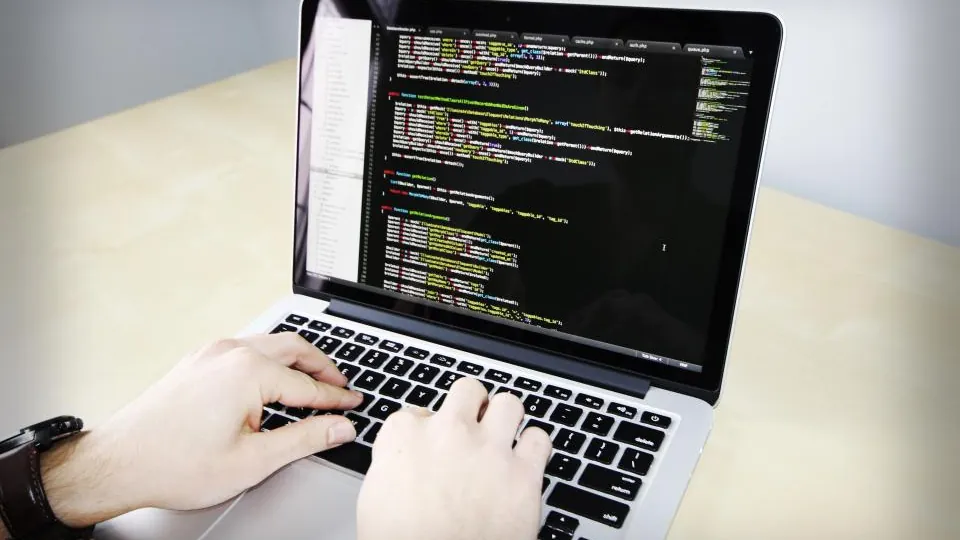
Photo: Kristin Hardwick / StockSnap (CC0)
Table of contents
One of the most common reasons candidates don't practice speaking: "I don't have anyone to practice with." Conversation classes cost money and need a schedule. Fluent friends may not have time. Practicing with coworkers feels awkward.
The good news is that most interview speaking practice works best alone. Interviews are fairly predictable. The questions are common, the stories come from your own experience, and what needs work is saying them smoothly. All of that can be done with a phone, a list of questions, and 20 minutes a day. This article gives you methods and a schedule you can use right away.
The basics: say it, record it, listen
Three principles make solo practice actually work:
- Say it out loud. Reading answers in your head feels like practice, but your mouth and the speaking part of your brain aren't working. In the interview, you'll stumble on words you've never said.
- Record it. While speaking, we don't really hear ourselves. A recording shows habits you can't feel: too many "umm"s, dropped final sounds, sentences that run too long.
- Listen with one focus. Don't judge everything at once. Each time you listen, focus on one thing: only count filler words, or only check tenses.
What you need: a voice recorder app on your phone, a note with a list of questions, and a timer. That's it.
Method 1: Record one-minute answers
This is the core exercise. Pick one interview question, set a one-minute timer, and answer while recording.
Steps:
- Pick a question from the most common English interview questions.
- Think for 30 seconds without writing full sentences. Just three keywords.
- Record your answer, one minute maximum.
- Listen once and note one thing to improve.
- Record again with that improvement.
The second recording is almost always better than the first. That difference is what builds confidence.
Example notes after listening:
- "I said 'so' seven times."
- "The third sentence was too long, and I lost my way."
- "I forgot to mention the project result."
A first and second recording, compared
Question: "What do you do in your current job?"
A first recording often sounds like this: "So, umm, in my job, so I am, umm, doing the backend, and also sometimes frontend, and so I handle the API and, umm, many things."
After listening with one focus, cutting "so" and "umm", the second recording can become:
I'm a backend developer at a logistics company.
I build and maintain our order API.
Sometimes I also help with the frontend.
No new words were learned. The only difference is a habit you noticed by listening to the recording.
If your phone has dictation or voice typing, try answering while it transcribes. If the wrong word appears on screen, that word needs to be said more clearly.
Method 2: Shadowing
Shadowing means listening to a native speaker and repeating right after them, copying their pace, pauses, and word stress. It trains the rhythm of English, not just vocabulary.
How to do it:
- Pick a short clip (1–2 minutes) that's relevant: a job interview video, a podcast about your field, or a tech conference talk.
- Listen once without repeating.
- Play it again and say each sentence right after the speaker, like a shadow.
- Focus on the rise and fall of the voice and the stressed words, not every sound.
Five minutes of shadowing a day is enough. Pick a speaker whose pace and style you'd like to copy. It's also a good way to practice the sounds covered in Indonesian accent in English interviews.
Method 3: Solo mock interviews
After a few days of single-question practice, start combining them into full mock interviews. The goal is to get used to answering questions in a row without knowing the order.
A simple setup:
- Write 10–15 questions on slips of paper or in a notes app.
- Shuffle them.
- Turn on your laptop camera and record as if it were real.
- Take one question, read it aloud, pause, then answer.
- Move to the next question without stopping to fix anything.
The camera matters because real interviews happen over video. You get used to looking at the camera, managing your expression, and talking while seeing your own face on screen.
Three example questions for one mock session:
Tell me about yourself.
Tell me about a time you made a mistake at work.
Why are you interested in this role?
Don't forget to practice the start and end too: the small talk in the first minute and your closing lines.
Build a story bank
Any practice works better with clear material. Prepare 4–6 real stories from your experience, each with three keywords.
| Story | Keywords |
|---|---|
| A project you're proud of | dashboard, Excel, fewer mistakes |
| A problem you solved | slow API, cache, faster |
| A mistake and its lesson | wrong estimate, told client early, new plan |
| Teamwork | designer, disagreed, tested both |
| Learning something new | Docker, one weekend, used at work |
Every story must be something that really happened. If the job post asks for a skill you haven't used, practice the honest answer too: "I haven't used it yet, but I've used something similar."
A 20-minute daily routine
| Minutes | Activity |
|---|---|
| 0–5 | Shadow one short clip |
| 5–15 | Record two one-minute answers, listen, record again |
| 15–20 | Repeat your core sentences and rescue phrases aloud |
Once a week, swap the daily routine for a full 20–30 minute mock interview. Consistency matters more than length. Twenty minutes every day for two weeks usually feels more effective than three hours on a weekend.
Common mistakes
- Only writing answers. Writing helps you organize ideas but doesn't train fluency. Every written answer must be spoken.
- Refusing to listen to your recordings. Almost nobody likes hearing their own voice. But without this step, bad habits stay hidden.
- Memorizing word for word. Rigid scripts collapse under stress. Memorize keywords and story flow.
- Fixing everything at once. Focus on one thing per session.
- Only practicing your favorite questions. The questions you avoid most are the ones that need practice most.
- Never practicing in interview conditions. Now and then, practice with a headset, camera on, sitting upright, so the real day feels familiar. It also helps you handle nerves.
Summary
Speaking practice for interviews can be done alone, and it's often most effective that way. Say your answers out loud, record them, listen with one focus, and repeat. Add shadowing for rhythm, a full mock interview once a week, and a bank of real stories as material. Twenty minutes a day, done consistently, is enough to feel a real change.
Repartee also has a practice mode and job-post prep: you can practice answering questions relevant to the role you're applying for, with scripts built from your own profile.
Related articles
 Preparation
6 min read
How to Read the Job Description Before Your Interview
How to read an English job description before the interview: what common terms really mean, mapping requirements to your experience, predicting questions.
 Technical
6 min read
Technical Interviews in English: A Guide for Software Engineers
A guide to English technical interviews for engineers: thinking out loud, clarifying the problem, explaining code, and phrases for when you get stuck.
 Mindset
6 min read
How to Handle Nerves in an English Job Interview
Practical steps to manage nerves before and during an English interview: the right preparation, rescue phrases, and how to recover when you go blank.