The STAR Method for English Interviews, With Examples
 7 min read
TL;DR
STAR (Situation, Task, Action, Result) is a frame for answering 'tell me about a time…' questions. The Action part should be the longest, and the Result should be clear. Prepare four or five real stories before the interview and reuse them across many questions.
Key takeaways
- Use STAR for questions that start with 'Tell me about a time…' or 'Give me an example…'.
- Situation and Task: one or two sentences. Action: three or four. Result: one or two.
- Say 'I', not 'we', when you describe what you did.
- One real story can answer several different questions.
- If you haven't faced the situation, say so honestly and share the closest one.
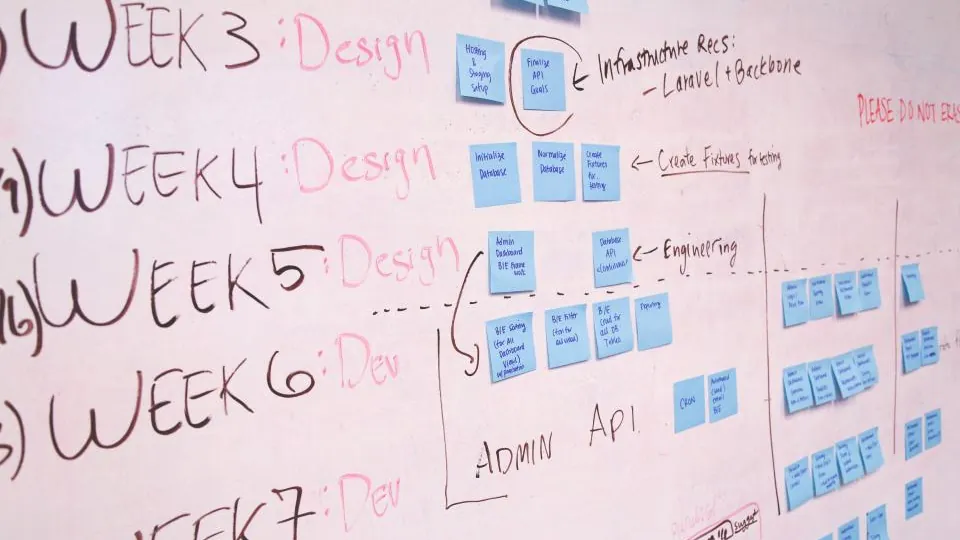
Photo: Startup Stock Photos / StockSnap (CC0)
Table of contents
In an English-language interview, you will almost certainly hear something like "Tell me about a time you solved a difficult problem" or "Give me an example of when you worked under pressure." These are called behavioral questions. The interviewer wants evidence from real experience, not your opinion of yourself.
The problem is that telling a story in a second language is hard. It drifts. The order jumps around. The most important part gets forgotten. The STAR method helps because it gives you a fixed order. You only have to fill four boxes.
What the STAR method is
STAR stands for the four parts of the story:
| Letter | Part | Question it answers | Length |
|---|---|---|---|
| S | Situation | Where, when, what was the context? | 1–2 sentences |
| T | Task | What was your responsibility or problem? | 1 sentence |
| A | Action | What did you do, step by step? | 3–4 sentences |
| R | Result | What happened, and what did you learn? | 1–2 sentences |
Look at the proportions. Action is the core of the answer. Many candidates spend most of their time on the Situation (the company's background, the team, the history of the project), so the Action and Result get rushed. But the interviewer is judging you on what you did and what came of it.
A good answer is about 6–9 short sentences, or one to two minutes.
Sentence patterns for each part
You don't need advanced vocabulary. These patterns are enough, and they're all short.
Situation
At my last job, I worked on a furniture brand's online store.
Last year, our team was building a booking app for a clinic.
Task
My task was to fix the slow checkout page.
I was responsible for the database migration.
Action
First, I checked the logs to find the slowest queries.
Then, I added an index to the orders table.
After that, I tested the change on a copy of the data.
Finally, I wrote a short guide so the team could do the same.
The words first, then, after that, finally do a lot of work. The listener knows the order right away, and you don't lose your place.
Result
As a result, the page loaded much faster.
The client was happy, and we finished one week early.
I learned to measure first before changing code.
If you have an accurate number, use it. If you're not sure of the number, don't guess. Describe the result in plain terms instead: "Customers stopped complaining about the slow page." That's still strong, and it's honest.
Full STAR example answers
"Tell me about a time you solved a difficult problem."
(S) At my last job, our online store had a slow checkout page. (T) My task was to find the cause and fix it. (A) First, I checked the server logs. I found two database queries that took too long. Then, I added an index and removed one extra query. I tested everything on a staging server before release. (R) After the fix, checkout became noticeably faster. Fewer users left the page before paying.
"Give me an example of when you worked with a difficult client."
(S) I was a freelance designer for a small coffee shop. (T) The owner kept changing the logo direction every week. (A) I suggested a short call to agree on three key goals. I wrote the goals in a shared document. After that, I showed two options that matched those goals. (R) We chose a final logo in the next meeting. Since then, I always agree on goals before I start designing.
"Tell me about a time you made a mistake."
(S) In my first year as a developer, I released a change on a Friday. (T) It broke the login page for some users. (A) I rolled back the change within an hour. Then I told my lead what happened. On Monday, I added a test for that case. (R) The bug never came back. I also stopped releasing big changes late on Fridays.
Mistakes and weaknesses get their own article: how to answer "What are your weaknesses?".
Build a story bank
You don't need a separate story for every possible question. Prepare four or five strong, real stories and reuse them. One story can often answer several questions.
| Story | Can answer questions about |
|---|---|
| Fixing a slow checkout page | problem solving, initiative, working under pressure |
| A client who kept changing their mind | difficult clients, communication, negotiation |
| A bad Friday release | mistakes, ownership, learning from failure |
| Onboarding a new teammate | teamwork, leadership, patience |
| Learning a new tool quickly | adaptability, learning fast |
How to build your bank:
- Write down 8–10 work moments you remember clearly, including ones that didn't go well.
- Pick the four or five with the clearest Action and a result you can explain.
- Write each one in STAR format, in simple English.
- For each story, note which questions it can answer.
The same bank helps when you explain your projects in English, because the structure is similar.
When you haven't been in that situation
Sometimes the question is about something you've never done, like "Tell me about a time you managed a team." Don't make up a story. Experienced interviewers dig into details, and invented stories fall apart quickly.
Use this honest pattern instead:
I haven't managed a team officially yet. But I did lead a small project with two other developers. I split the tasks and ran a short check-in every morning. We delivered on time.
Or, if there's truly nothing similar:
I haven't been in that situation yet. If it happened, I would first talk to the person directly. Then I would ask my manager for advice.
An answer like this shows honesty and how you think. That's far better than a story that sounds rehearsed and thin.
Common STAR mistakes
1. A Situation that goes on forever. The interviewer doesn't need the company's history. One or two sentences of context is enough.
2. Saying "we" the whole time. "We fixed the bug. We released it." So what did you do? Use "I" for the work you actually did. Mention the team when it matters, but make your role clear.
3. Forgetting the Result. The story stops at the Action, then silence. Always close with an outcome, even if the outcome is a lesson.
4. Inflated results. "I increased revenue by 300%" invites follow-up questions. Only quote numbers you know for sure and can explain.
5. Long chains of "and". "And then I checked the logs and I found the query and I added the index and…" Break it into short sentences with first, then, after that.
6. Stories that are too small or too old. Choose stories from the last two or three years that show skills relevant to the role.
STAR practice checklist
- I have four or five real stories in STAR format.
- Each story has an Action with at least three steps, told with "I".
- Each story ends with a clear Result (an outcome or a lesson).
- Every number I mention is accurate and I can explain it.
- Each story takes one to two minutes to tell.
- I know which story fits which question.
- I've practiced the "I haven't…, but I did…" pattern.
Summary
The STAR method keeps your stories in order, even in a second language. Keep the Situation and Task short, make the Action the longest part with clear steps, and always state the Result. Prepare four or five real stories, reuse them across many questions, and never invent experience. For a list of behavioral questions that come up often, see the most common English interview questions.
In Repartee, the stories you type into your profile become material for answer scripts during the interview. Scripts are built only from experience in your profile, and their claims are checked before they're marked as verified.
Related articles
 Common Questions
6 min read
How to Answer "Why Should We Hire You?" in English
How to answer why should we hire you: match the role's needs with real evidence, use a three-step formula, and keep your English sentences short.
 Common Questions
6 min read
Honest Answers When You Haven't Done It: 'Have You Ever…?'
How to answer interview questions about things you haven't done yet: admit, bridge, and plan to learn, with short English sample answers.
 Common Questions
6 min read
How to Answer Team Conflict Questions in an English Interview
How to answer 'Tell me about a conflict with a teammate' in English: picking the story, a short STAR structure, sample answers, and common mistakes.