Commonly Mispronounced Tech Terms in English Interviews
 6 min read
TL;DR
Many of us learned tech terms by reading, so we pronounce them with Indonesian spelling rules. Learn the 30 or so terms most often misread, focus on word stress, and practice them inside sentences, not one by one.
Key takeaways
- A mispronounced tech term can leave the interviewer unsure which tool you mean.
- Word stress often matters more than getting every sound exactly right.
- Some terms have more than one accepted pronunciation, like SQL and data.
- Practice terms inside short sentences you'll actually say.
- When in doubt, listen to how the tool's creators say the name.

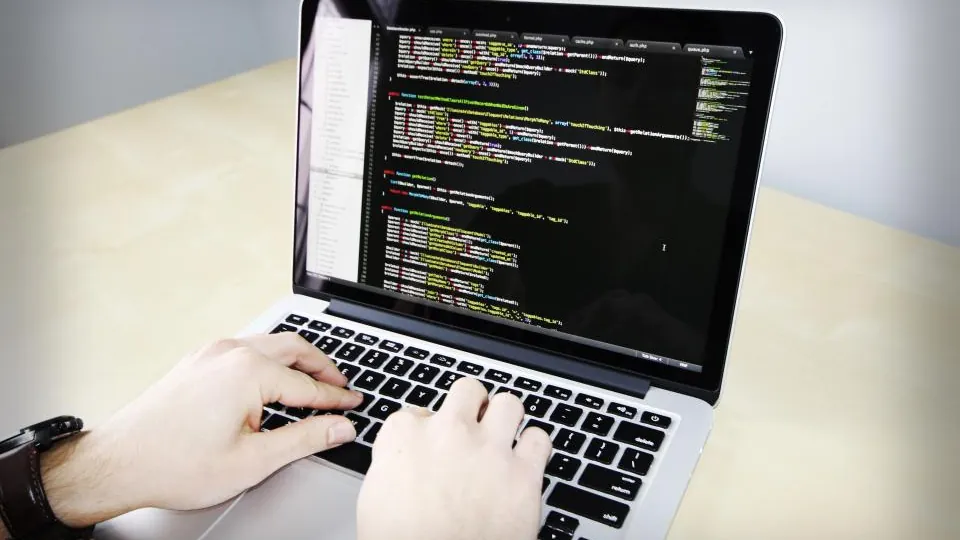
Photo: Maciej Korsan / StockSnap (CC0)
Table of contents
You've used Kubernetes for five years, but you've always said "ku-ber-NE-tes" because you learned it from docs and written tutorials. Your local team understands you. In an interview with a company abroad, the interviewer pauses and asks, "Sorry, which tool?"
This is very common among Indonesian engineers, designers, and analysts. We learn tech terms by reading, not listening, so our brains apply Indonesian spelling rules. The result: a term you know deeply sounds unfamiliar to the interviewer. This article covers the terms people most often get wrong, with simple respellings that are easy to follow.
How to read the respellings
We don't use phonetic symbols here. Each term is written as a simple respelling instead. The part in CAPITAL LETTERS is the stressed syllable, said a little louder and longer.
A few sound guides:
- oo as in "food".
- ee as in "see".
- ay as in "day".
- uh a weak, relaxed sound, as in the "a" of "about".
- eye, and y at the end of a syllable like PY or HY, as in "my".
Respellings are an approximation, not a replacement for listening. For best results, check them against the audio in an online dictionary or the tool's official videos.
Tool and technology names
This is the group people get wrong most, because product names don't always follow normal English spelling.
| Term | Often said as | Common pronunciation |
|---|---|---|
| Kubernetes | ku-ber-NE-tes | koo-ber-NET-eez |
| nginx | ngi-neks | EN-jin-EKS |
| Linux | LYE-nuks | LIN-uks |
| Azure | a-ZOO-reh | AZH-er |
| Django | dee-JANG-go | JANG-oh (silent d) |
| Vue | voo-eh | VYOO (like "view") |
| Vite | VYTE | VEET |
| Redis | reh-DIS | RED-iss |
| Ubuntu | oo-BUN-too | oo-BOON-too |
| Jira | JEE-rah | JEER-uh |
| JSON | JEH-son | JAY-sun |
| PostgreSQL | pos-gre-es-kee-el | POST-gres or POST-gres-Q-L |
| Laravel | la-RAH-vel | LAR-uh-vel |
| Python | PEE-ton | PY-thahn |
For product names, the best source is the creators themselves. The official docs for some tools, such as nginx and Django, explain how to say the name. Official conference talks and tutorials help too.
Acronyms: spell them or say them as a word?
Acronyms are confusing because some are spelled letter by letter and some are read as a word. Follow common usage, and use English letter names, not Indonesian ones.
| Acronym | Common way |
|---|---|
| API | ay-pee-EYE (spelled out) |
| SQL | ess-kyoo-ELL or SEE-kwul (both accepted) |
| MySQL | my-ess-kyoo-ELL |
| GUI | GOO-ee |
| SaaS | SASS |
| CI/CD | see-eye see-dee |
| iOS | eye-oh-ESS |
| YAML | YAM-ul |
| OAuth | OH-awth |
English letter names differ from Indonesian ones. A is "ay", E is "ee", I is "eye", G is "jee", J is "jay", Q is "kyoo", R is "ar". If you say "ah-peh-ee" for API, the interviewer may need a second to catch it.
Common tech words with shifted stress
With these words, the sounds are usually right, but the stress lands on the wrong syllable. Indonesian tends to stress the second-to-last syllable, while English has no fixed pattern.
| Word | Often said as | Common pronunciation |
|---|---|---|
| develop | DEH-veh-lop | dih-VEL-up |
| developer | deh-veh-LOH-per | dih-VEL-uh-per |
| deploy | DEE-ploy | dih-PLOY |
| architecture | ar-see-TEK-toor | AR-kih-tek-cher |
| algorithm | al-go-REET-em | AL-guh-rith-um |
| component | kom-POH-nen | kum-POH-nent |
| analysis | ah-nah-LEE-sis | uh-NAL-uh-sis |
| variable | vah-ree-AH-bel | VAIR-ee-uh-bul |
| integer | in-TEH-ger | IN-tuh-jer |
| hierarchy | hee-eh-RAR-kee | HY-er-ar-kee |
| schema | SKEH-mah | SKEE-muh |
| cache | KETCH / KAH-cheh | KASH |
| queue | KYOO-eh-oo | KYOO |
| suite | SOO-it | SWEET |
| async | ah-SING | AY-sink |
| database | dah-tah-BES | DAY-tuh-bays |
The two words that trip people up most are cache and queue. "Cache" sounds exactly like "cash". "Queue" sounds exactly like the letter "Q". Once you know that, both are easy to remember.
The -s and -ed endings on tech terms
Tech terms often appear in plural or past forms, and that's where many Indonesian speakers drop the final sound. "APIs" is ay-pee-EYEZ, with a small "z" at the end. "Databases" is DAY-tuh-bay-siz, one syllable longer than the singular.
With past tense, the opposite habit appears: saying -ed as a full extra syllable. "Deployed" is dih-PLOYD (two syllables, not "dee-ploy-ed"), and "fixed" is FIKST (one syllable). The -ed ending only becomes its own syllable after a t or d sound, as in "tested" (TES-tid) and "updated" (up-DAY-tid).
Everyday work words
Beyond tech terms, some everyday words come up constantly when you explain projects, and they're often stressed or voiced differently.
- determine: dih-TER-min (not "deh-ter-MINE")
- manager: MAN-ih-jer
- message: MES-ij
- image: IM-ij (not "ih-MAYJ")
- mobile: MOH-bul (American style)
- native: NAY-tiv
- router: ROW-ter, rhymes with "outer" (American style)
- data: DAY-tuh or DAT-uh, both common
If you often explain projects, practice these in full sentences. Tips on structuring the explanation are in how to explain your projects in English.
Ready-made practice sentences
Say these slowly first, then at normal speed. Pay attention to the stressed syllables.
We deployed the app on Kubernetes last year.
I added a Redis cache to speed up the API.
The jobs run in a queue, so users don't wait.
I designed the database schema for the new feature.
Our architecture has three main components.
Swap in the tools you actually use. The best practice sentences are the ones you'll really say in the interview.
Common mistakes when practicing
- Practicing words in isolation. Saying "Kubernetes" correctly ten times isn't the same as saying it mid-sentence. Practice in context: "We moved our services to Kubernetes last year."
- Focusing on sounds and forgetting stress. Correct stress often makes a word recognizable, even if a sound or two is off.
- Avoiding the term entirely. Some candidates avoid "architecture" because they fear saying it wrong, then use a long workaround. Just say it with the right stress.
- Forcing a specific accent. You don't need to sound American. You need the term to be recognized. We talk about accents in Indonesian accent in English interviews.
- Correcting the interviewer. If the interviewer says a term differently from this list, let it go. Many terms have variants.
A 15-minute practice checklist
- Write down the 10 tech terms you say most when describing your work.
- Look them up in an online dictionary with audio, or in the tool's official videos.
- Mark the stressed syllable in capital letters.
- Write one short sentence for each term, like "I use Redis for caching."
- Say each sentence three times, record it, and compare with the original audio.
- Add the terms to your interview practice answers, as in solo speaking practice.
Summary
Mispronounced tech terms can make your skills sound weaker than they are. Start with the tool names you say most often, focus on the stressed syllable, and practice inside short sentences. You don't need a perfect accent. You just need the terms to be recognized.
In Repartee, the interviewer's question appears on screen as a transcript, so you can see how the terms they say are spelled. The answer script is written out in full too, so you can read difficult terms and practice them again after the interview.
Related articles
 Technical
6 min read
How to Explain Technical Trade-offs in English
A simple formula for explaining technical trade-offs in English interviews: options, context, decision, cost, and when you'd change, with sample answers.
 Technical
6 min read
Technical Interviews in English: A Guide for Software Engineers
A guide to English technical interviews for engineers: thinking out loud, clarifying the problem, explaining code, and phrases for when you get stuck.
 Technical
6 min read
How to Explain Your Projects in English in an Interview
A five-part frame for explaining your projects in English: problem, role, solution, result, lesson. With short example sentences and follow-up answers.