Small Talk at the Start of an English Interview: Examples
 6 min read
TL;DR
Small talk at the start of an interview isn't a test; it's a warm-up. Answer briefly and warmly, add one small detail, then ask back. Prepare answers for the six or seven most common openers.
Key takeaways
- Small talk is a warm-up for both sides, not part of the technical assessment.
- The best pattern: short answer, one detail, then ask back.
- Opening questions are fairly predictable, so you can prepare for them.
- Avoid one-word answers and also long stories.
- Let the interviewer move the conversation to the main part.

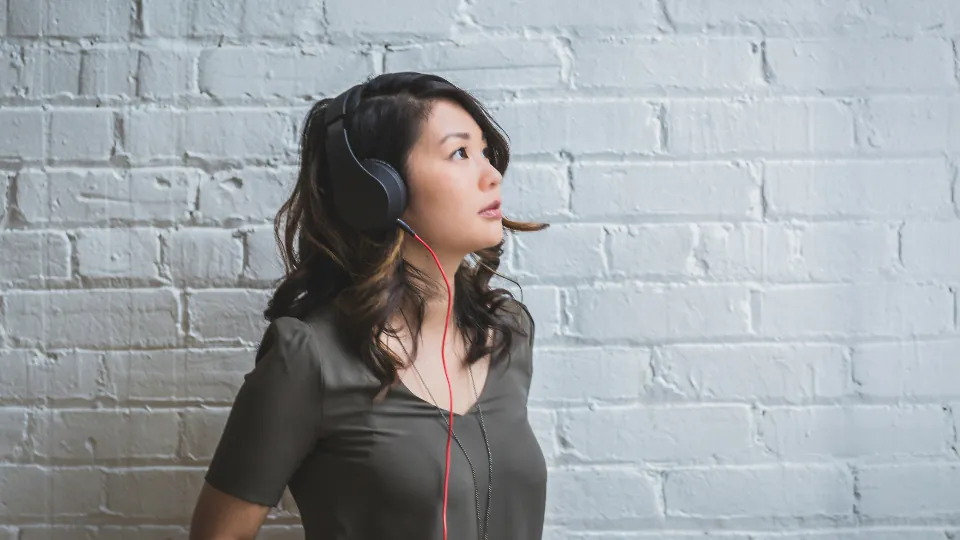
Photo: Christina Morillo / StockSnap (CC0)
Table of contents
The interview starts. You've prepared your answer to "Tell me about yourself", but the interviewer asks, "So, how's your week going?" Or, "Where are you calling from? Is it evening there?"
For many Indonesian candidates, these first minutes feel the most awkward. Technical questions can be prepared, but casual chat feels unpredictable. The answer that comes out is often too short ("Good.") or too long and stiff. The good news: small talk at the start of an interview follows a fairly predictable pattern. This article covers the common questions, sample answers, and how to move smoothly into the main part.
Why interviewers start with small talk
Small talk has a simple purpose: to relax the mood before the serious questions. Interviewers know candidates are often nervous, and a few minutes of light chat gives everyone time to settle in, including checking that audio and video work.
At companies with teams across many countries, the opening chat also gives a first look at how you communicate with colleagues day to day. There are no right or wrong answers here. What shows is whether you're friendly and easy to talk to.
So don't treat small talk as a test. Treat it as a warm-up, for you and for them.
The pattern: short answer, one detail, ask back
For almost any small-talk question, use this three-step pattern:
- Answer briefly. One direct sentence.
- Add one small detail. This makes the answer feel alive, not robotic.
- Ask back. Return the question so the conversation goes both ways.
Example for "How are you today?":
I'm good, thanks.
A bit excited about this call, actually.
How about you?
Compare that with the answer that often comes out under stress: "I'm fine, thank you, and you?" It's not wrong, but it sounds like a textbook drill. One small detail makes it feel natural right away.
Common opening questions
Here are the most common first-minute questions, with short sample answers. Replace the details with your real situation.
"How are you?" / "How's your day going?"
Pretty good, thanks. It's been a busy morning.
How's your day so far?
"Where are you calling from?"
I'm in Bandung, in Indonesia.
It's about seven in the evening here.
"Is it late there?" / "What time is it there?"
It's around eight in the evening. No problem at all.
I'm happy to take the call at this time.
"How's the weather there?"
It's rainy season now, so it rained this afternoon.
But it's nice and cool tonight.
"Did you find the link okay?" / "Can you hear me well?"
Yes, I can hear you clearly. Can you hear me okay?
"Have you had a busy week?"
A little, yes. I finished a project for a client.
So I'm glad to have some time for this call.
"Have you ever been to [interviewer's city]?"
Not yet, but I'd love to visit someday.
"Not yet, but I'd love to…" works for many similar questions. Don't claim you've been somewhere if you haven't. A follow-up question could put you in a tough spot.
Moving to the main part
Usually the interviewer moves the conversation forward, with something like "Great, let's get started" or "So, I'd love to hear about your background." Let them lead the transition. Your job is to respond as if you're ready:
Sure, sounds good.
Of course. Where would you like me to start?
If the small talk runs long and the interviewer seems unsure, you can help gently:
Thanks for the chat. I'm ready whenever you are.
When there's a tech problem or the interviewer is late
The first minute often includes small problems: the interviewer joins late, the video freezes, or the audio is silent. A calm response here leaves a good impression.
No problem at all. I'm ready when you are.
I think your video froze. Can you hear me?
Your audio is a bit quiet. Could you check your mic?
Don't show frustration if the interviewer is late. A relaxed "No worries, thanks for joining" is enough.
After the transition, the first question is often tell me about yourself. Prepare it as a natural next step after the small talk.
Safe topics and topics to avoid
Safe topics: the weather, time zones, the city you live in, a busy day, weekends in general, or something light about the company that you've read ("I saw your team just launched a new feature. It looks great.").
Topics to avoid at the start: politics, religion, salary, complaints about your current job, heavy personal problems, and comments on the interviewer's appearance. They're not forbidden, but they can make a light moment uncomfortable.
If the interviewer asks about Indonesia, that's a nice opening. Keep it short and positive:
Yes, it's a big country, with lots of islands.
I live in Surabaya. It's a busy city, and the food is great.
Common mistakes
- One-word answers. "Good." "Fine." "Yes." They stop the conversation and feel cold. Add at least one detail.
- Telling long stories. Small talk isn't the time to describe your whole morning. Two sentences are enough.
- Not asking back. If you only answer, the interviewer has to keep finding new questions. One "How about you?" balances the conversation.
- Jumping into a memorized answer. Asked "How are you?", some candidates launch straight into a full self-introduction. Wait for the interviewer to change the topic.
- Apologizing for your English at the start. "Sorry, my English is not very good." Now the interviewer is listening for errors. Just start in a friendly way.
- Saying "I'm fine, thank you, and you?" stiffly. Not wrong, but too formal. A relaxed "Pretty good, thanks. How about you?" sounds more natural.
Small-talk checklist
- An answer to "How are you?" with one real detail from your day.
- You know the time where you are and where the interviewer is.
- One sentence about your city.
- One light point about the company from its website or posts.
- "How about you?" and "Sounds good" ready as quick responses.
- A practiced transition: "Of course. Where would you like me to start?"
- All of it practiced out loud, as in solo speaking practice.
Summary
Small talk at the start of an interview is a warm-up, not a test. Answer briefly, add one real detail, then ask back. Prepare for the most common openers, avoid heavy topics, and let the interviewer move the conversation forward. If the first minute feels comfortable, the rest of the interview usually flows better too.
Repartee shows the transcript and translation from the moment the call starts, small talk included. That helps when the interviewer speaks fast or uses a casual phrase you haven't heard before.
Related articles
 English
6 min read
Phrases to Use When You Don't Understand an Interview Question
Polite English phrases to ask an interviewer to repeat, slow down, or explain a question, plus a simple way to check you understood before answering.
 Common Questions
6 min read
Honest Answers When You Haven't Done It: 'Have You Ever…?'
How to answer interview questions about things you haven't done yet: admit, bridge, and plan to learn, with short English sample answers.
 Common Questions
6 min read
How to Answer Team Conflict Questions in an English Interview
How to answer 'Tell me about a conflict with a teammate' in English: picking the story, a short STAR structure, sample answers, and common mistakes.