Common Grammar Mistakes in English Job Interviews
 6 min read
TL;DR
Interviewers don't expect perfect grammar, but a few repeated mistakes can blur your meaning. Focus on tenses, the -s ending, a few verbs that get mixed up, and words with no regular plural.
Key takeaways
- Perfect grammar isn't required; being clear is.
- Tenses cause the most mistakes because Indonesian verbs don't change for time.
- Memorize the correct version of your core sentences about yourself.
- Words like information and experience follow special plural rules.
- Short sentences cut your chances of grammar errors sharply.
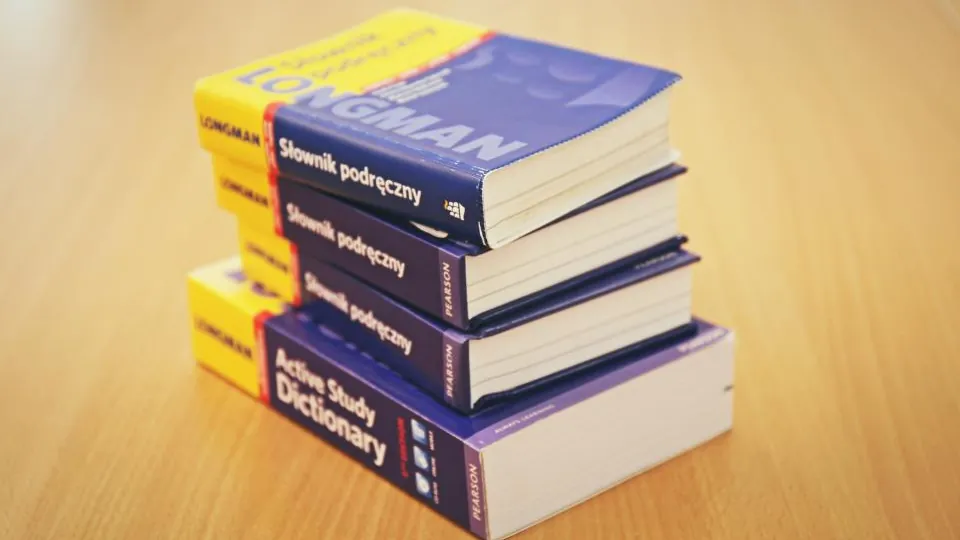
Photo: Freestocks.org / StockSnap (CC0)
Table of contents
Many Indonesian candidates hold back in interviews because they're afraid of grammar mistakes. Their answers become very short, hesitant, or full of mid-sentence corrections. Yet most interviewers, especially at companies with international teams, aren't looking for perfect English. They're looking for someone who can get the point across clearly.
Still, a handful of mistakes come up again and again with Indonesian speakers. Some barely matter. Others change the meaning, for example making a past job sound like something you're still doing. This article covers the mistakes you're most likely to make in an interview, with the correct versions side by side.
Why these mistakes happen
Most of these mistakes come from differences between the two languages. Indonesian verbs don't change with time. "Saya bekerja di sana" can mean past, present, or future, depending on context. Indonesian also doesn't add an ending to verbs for "he" or "she", and plurals are shown with words like "banyak" (many) or by repeating the noun.
Under stress, the brain falls back on the first language's patterns. That's why the most frequent mistakes aren't "hard" ones. They're basic rules you already know. The fix isn't relearning grammar from scratch. It's practicing the sentences you'll actually use in interviews until the correct version becomes a habit.
Tense mistakes: past, present, and "since"
This is the most important group, because interviews are mostly about past experience.
| Wrong | Right |
|---|---|
| Last year I work at a startup. | Last year I worked at a startup. |
| I am work as a developer. | I work as a developer. |
| I am working here since 2021. | I have been working here since 2021. |
| I work here for three years. | I have worked here for three years. |
| Yesterday I have a meeting. | Yesterday I had a meeting. |
Rules of thumb:
- Finished work uses the past tense: worked, built, led, fixed.
- Current work uses the present tense: I work, I build. Don't put "am" before a normal verb.
- With "since" or "for" reaching up to now, use have worked or have been working.
A safe way to tell a story: start with a time marker, then stay in the past tense.
In 2023, I joined a small agency.
I built three client websites there.
I also fixed their payment bug.
Overusing "until now" and "already"
These two words often come from direct translation. "Sampai sekarang saya masih bekerja di sana" usually becomes "Until now I still work there", when "I still work there" is enough. When you mean "up to this point", say "so far": "So far, I've built five APIs."
"Sudah" doesn't always need to become "already" either. "I already graduated in 2020" sounds more natural as "I graduated in 2020." The year already shows it's finished.
The missing -s
With "he", "she", "it", or a person's name, present-tense verbs take an -s. It's easy to forget because Indonesian has nothing like it.
| Wrong | Right |
|---|---|
| My manager give me feedback every week. | My manager gives me feedback every week. |
| The app help users track orders. | The app helps users track orders. |
| She don't like long meetings. | She doesn't like long meetings. |
The -s also goes missing on plural nouns: three year should be three years, many project should be many projects. It's a small error, but because it repeats, interviewers will notice it.
Words without a regular plural
Some English words can't simply take an -s, or their meaning changes when they do.
- Information, not informations. "Thanks for the information."
- Advice, not advices. "My mentor gave me good advice."
- Feedback, not feedbacks. "I got feedback from the client."
- Equipment, not equipments.
- Experience as general know-how has no -s: "I have experience in React." For specific events, the plural is fine: "I had two bad experiences with vendors."
"I have many experiences in Laravel" sounds off. Say "I have a lot of experience with Laravel" or "I've used Laravel for three years."
Verbs and prepositions that get mixed up
Many mistakes come from translating word for word from Indonesian.
| Wrong | Right | Note |
|---|---|---|
| I am agree. | I agree. | "Agree" is already a verb. |
| We discussed about the design. | We discussed the design. | "Discuss" takes no "about". |
| I'm interesting in this role. | I'm interested in this role. | "Interesting" describes the thing. |
| I very like backend work. | I really like backend work. | "Very" doesn't modify verbs. |
| Please explain me the process. | Please explain the process to me. | |
| I joined to the team in 2022. | I joined the team in 2022. | |
| I'm responsible of the API. | I'm responsible for the API. | |
| I'm graduated from UGM. | I graduated from UGM. | |
| According to me, ... | In my opinion, ... | "According to me" sounds odd. |
Watch out for "I'm interesting" most of all. "I'm interesting in this job" means "I am an interesting person", not "I'm interested".
Common mistakes when correcting yourself
Beyond the grammar itself, some habits make the problem feel bigger than it is:
- Correcting yourself mid-sentence again and again. "I work… worked… I have worked…" This distracts more than one small error. If you slip, keep going. Only correct when the meaning changes.
- Building very long sentences. Long sentences with nested clauses invite tense errors halfway through. Short sentences are safer. More in short sentences, clearer answers.
- Studying rules instead of practicing sentences. Knowing "since + present perfect" is different from saying it under pressure. Practice means speaking sentences, not doing exercises.
- Apologizing for your grammar. "Sorry, my grammar is bad." Skip it. It pulls attention away from what you're saying.
Checklist: core sentences to get right
Instead of memorizing every rule, prepare ten sentences you'll almost certainly use, and make sure each one is correct. Ask a fluent friend or a grammar checker to review them.
- Current job: "I work as a ... at ..."
- How long: "I've been working there since ..." or "for ... years"
- Previous job: "Before that, I worked at ..."
- Education: "I graduated from ... in ..."
- Main skill: "I have experience with ..."
- One achievement: "I built / led / improved ..."
- Why this role: "I'm interested in this role because ..."
- Something new to you: "I haven't used ... yet, but I've used ..."
- Polite agreement: "I agree. And I'd add that ..."
- Closing: "Thank you for your time."
Practice these alongside your answer to tell me about yourself, since most of the core sentences show up there.
Summary
Perfect grammar won't decide your interview, but repeated mistakes can blur your story. Focus on three areas: past tense for past experience, the -s ending, and word-for-word translations like "I am agree" or "I'm interesting". Prepare correct versions of your core sentences, and keep sentences short so there's less room for error.
Repartee's answer scripts are written in short sentences, about 12 words at most, built from your own profile. Beyond helping during the interview, they give you correct example sentences you can study later in the recap.
Related articles
 Preparation
6 min read
How to Read the Job Description Before Your Interview
How to read an English job description before the interview: what common terms really mean, mapping requirements to your experience, predicting questions.
 Technical
6 min read
Technical Interviews in English: A Guide for Software Engineers
A guide to English technical interviews for engineers: thinking out loud, clarifying the problem, explaining code, and phrases for when you get stuck.
 English
6 min read
Solo Speaking Practice for English Job Interviews
How to practice speaking English alone for an interview: recording yourself, shadowing, mock interviews, and a simple 20-minute daily routine that works.