Interview Day Checklist for an Online English Interview
 6 min read
TL;DR
Interview day is not the time to learn anything new. Focus on three things: a safe technical setup, a voice that's already warmed up, and a few emergency phrases within reach. Follow the timeline from the night before to after the call so nothing slips.
Key takeaways
- Don't study new material on the day; just review what you prepared.
- The night before: prepare devices and notes, and get enough sleep.
- 30 minutes before: test audio, close other apps, get a glass of water.
- 5 minutes before: warm up your voice by saying your opening answer out loud.
- Afterward: write down the questions you got and send a thank-you email.
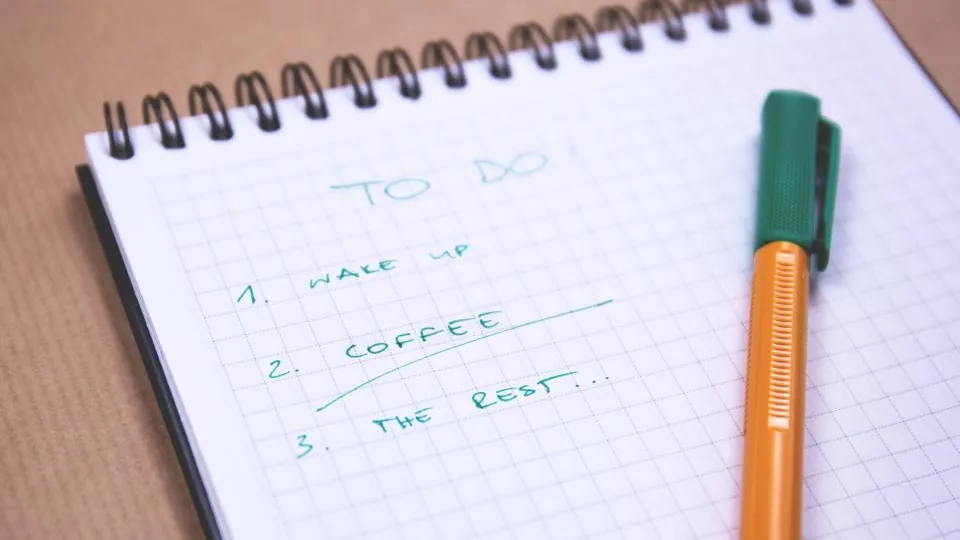
Photo: Freestocks.org / StockSnap (CC0)
Table of contents
Days of preparation can come undone because of something small on the day itself: a headset with a dead battery, a meeting link you can't find, or a stiff voice because you haven't spoken since breakfast. In an English-language interview, these little things add load to a brain that's already busy with the language.
This checklist follows the clock. Copy it, print it, or save it on your phone, then tick things off one by one.
The night before
The goal tonight is simple: nothing should need hunting for tomorrow.
- Test your devices once more. Headset, mic, camera, and meeting app. The full guide is in Zoom and Meet setup for online interviews.
- Charge everything: laptop, headset, and your backup phone.
- Save the meeting link, time, and time zone in one place. Double-check if the interviewer is in another time zone.
- Prepare a one-page note: your "tell me about yourself" answer, three key stories, and two questions for the interviewer.
- Reread the job description and mark the three things they want most.
- Lay out your clothes. Neat from the waist up is enough on video, but pick something you feel comfortable in.
- Get enough sleep. Late-night extra practice usually hurts more than it helps.
One thing not to do tonight: rewrite all your answers from scratch. Trust the preparation you've already done.
If you're interviewing with a company abroad and the call falls late in your evening, adjust the rhythm. Don't burn all your energy during the day. Plan a rest in the afternoon, and treat "a few hours before" in this checklist as relative to the call, whatever the clock says.
A few hours before
- Eat something. Not on an empty stomach, and not too full either.
- Speak a little English. Read an article out loud or listen to an English podcast. The point is to get your ears and mouth back in the habit.
- Review your one-page note, not your entire prep folder.
- Tell people at home when your interview is, so you're not interrupted.
- Recheck the invite email. Times, links, or interviewer names sometimes change at the last minute.
- Say your three key stories out loud once, without reading your notes.
30 minutes before
At this point, the focus is your setup and your space.
- Start your laptop and open the meeting app. Go to the preview screen and check camera and mic.
- Confirm the selected mic and speaker are the headset you're wearing.
- Close apps you don't need: downloads, games, cloud sync.
- Silence notifications from chat and email, especially if you'll share your screen.
- Put a glass of water within reach.
- Place your notes where you can see them, without having to keep looking down.
- Phone on silent, but nearby as a backup connection.
5 minutes before: warm up your voice
This is the step people skip most. If you haven't spoken English at all today, your first sentence can feel stiff. Do a quick warm-up:
- Say your small talk openers out loud:
Hi, nice to meet you. Thanks for having me today.
I'm doing well, thank you. How about you?
- Say the first two sentences of your "tell me about yourself" answer:
I'm a backend developer with three years of experience. I mostly build APIs for online stores.
(Use your own version.)
- Take a few slow breaths. Breathe out for longer than you breathe in. More techniques are in how to handle nerves in an English interview.
Join the meeting a minute or two before the start time. There's no need to be very early. A long wait in the lobby can make you more nervous, not less.
Ideas for those first few minutes are in small talk at the start of an interview.
During the interview: an emergency phrase card
Write these phrases on a small card or sticky note near your screen. You may never use them, but knowing they're there is calming in itself.
| Situation | Phrase |
|---|---|
| You missed the question | "Sorry, could you repeat the question?" |
| You need time to think | "That's a good question. Let me think for a moment." |
| You want to check the meaning | "Do you mean…?" |
| Connection trouble | "Sorry, you froze. Could you say that again?" |
| A word won't come | "I'm not sure of the word. It's like…" |
| Your answer is running long | "To sum up, …" |
| You haven't done it | "I haven't done that yet. But I've done…" |
During the interview, keep three things in mind: short sentences, one idea per sentence, and it's fine to ask when you don't understand. Simple, clear English beats long, tangled sentences.
If one answer goes badly
Almost every candidate has one answer that feels weak. Don't let it spoil the rest of the interview. Take a breath and give the next question your full attention. Interviewers judge the whole conversation, not one sentence that stumbled.
If a few minutes later you remember an important point you missed, you can add it politely:
Can I add one thing to my earlier answer?
I forgot to mention one example. It's short.
Interviewers usually appreciate this. Just keep the addition short, relevant, and based on your real experience.
After the interview
Don't just close the laptop and move on. The ten minutes after the interview are valuable.
- Write down every question you remember, including the hard ones.
- Note what went well and what you want to improve.
- Note the interviewer's name and anything specific you discussed, for your thank-you email.
- Send a short thank-you email within 24 hours. Templates are in closing the interview and the follow-up email.
- Rest. Whatever the result, you just got through an interview in English. That's real practice.
A simple note format is enough:
Question: … My answer (short): … What I'd improve: …
Your list of questions is gold for the next interview. Today's hard question is one you can prepare for next time, especially if you're applying for similar roles.
Common interview-day mistakes
- Studying new material that morning. It adds anxiety, not readiness.
- Testing devices five minutes before. If something's wrong, there's no time to fix it.
- Not speaking at all before the call, so the first sentence comes out stiff.
- Too many notes. One page is enough. More than that and you'll be searching mid-answer.
- Reading your notes constantly, so eye contact disappears.
- Forgetting everything afterward, when those questions could be your best practice material.
Summary
Interview day isn't for learning; it's for running your preparation calmly. Handle devices and notes the night before, the technical setup 30 minutes out, and a voice warm-up five minutes out. Keep an emergency phrase card nearby, and write everything down when it's over.
If you use Repartee, add it to your 30-minute check: open the app and make sure the transcript appears when audio plays. After the interview, its recap feature can help you review the questions you were asked.
Related articles
 Ethics
6 min read
Using AI for Job Interviews Ethically
When using AI for interview prep and interviews is fair, and when it isn't: practice, polishing real stories, company rules, and the limits of honesty.
 Tools & Setup
7 min read
Zoom and Google Meet Setup for Online Interviews
A Zoom and Google Meet setup checklist for online interviews: audio and headset, a test call, camera and light, connection, screen sharing, and backups.
 Mindset
6 min read
How to Handle Nerves in an English Job Interview
Practical steps to manage nerves before and during an English interview: the right preparation, rescue phrases, and how to recover when you go blank.