Phrases to Buy Thinking Time in an English Interview
 6 min read
TL;DR
A short pause before answering is normal, as long as you signal it. Use a brief pause phrase, then an opener that sets direction, while you plan two or three points in your head.
Key takeaways
- A 3–5 second pause is normal; silence with no signal is what feels awkward.
- Good pause phrases are short, honest, and not repeated all the time.
- An answer opener buys extra time and gives your answer a shape.
- Build answers as point, example, result so they don't wander.
- Replace long 'umm' sounds with calm silence or a practiced phrase.

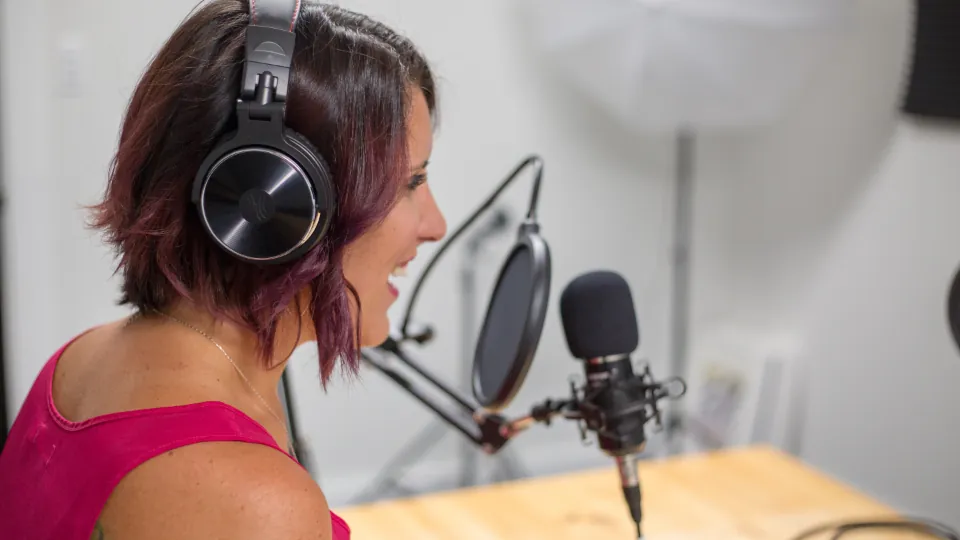
Photo: Burst / StockSnap (CC0)
Table of contents
The question is clear. You understand it. But your answer isn't ready yet. In your first language you'd say "Hmm, give me a second" and think. In English, many candidates panic instead. They start talking with no direction, or fill the silence with "umm… so… so…".
The good news is that asking for a moment is completely normal in interviews, even for native speakers. What you need is a way to signal that you're thinking, not lost. This article gives you pause phrases, answer openers, and a simple method to use those few seconds well.
Pausing is fine; silent confusion is not
Interviewers don't expect an answer within one second. A question like "Tell me about a difficult decision you made" needs time to pick the right story. A three to five second pause after that kind of question looks natural. It even shows you're weighing your answer.
The problem is an empty pause. On a video call, the interviewer can't read your body language well. Five seconds of silence with no signal can look like a frozen connection, confusion, or no answer at all. One short phrase changes that impression.
Before you ask for time, make sure you understood the question. If you didn't, clarify first with the phrases in phrases when you don't understand the question.
Short pause phrases
These cover the first two to five seconds. Pick two or three that feel natural, not all of them.
That's a good question. Let me think for a second.
Let me think about that.
Give me a moment to pick the best example.
Hmm, let me see.
Good question. I want to give you a real example.
The last one has a bonus. It tells the interviewer that a real example is coming, not theory. That makes them happy to wait.
A note on "That's a good question." It's fine, but not for every question. Said five times in one interview, it sounds like a habit, not a compliment.
Openers that give your answer direction
After the pause, you don't have to jump straight into details. A general but relevant opener gives you a few more seconds and gives your answer a shape.
There are two things I'd mention here.
The example that comes to mind is from my last project.
I'd answer that in two parts.
It depends, but usually I start with the data.
I can think of one example from my freelance work.
"There are two things I'd mention here" is especially useful. Once you say it, you have a frame: point one, point two, done. The interviewer can follow you easily too.
One warning: don't promise three points if you only have one. "Two things" or "one example" is safer. If you remember another point halfway through, you can always add "One more thing…".
Building an answer in five seconds
Pause phrases only help if you use the time to think. In your head, build the answer with a simple three-step pattern:
- Point. One sentence that directly answers the question.
- Example. One real situation from your experience.
- Result. What happened, or what you learned.
Here's an example for "How do you handle tight deadlines?":
Let me think for a second.
I break the work into small parts first.
At my last job, we had one week for a new feature.
I listed the tasks and asked which ones mattered most.
We shipped the main part on time. The rest came a week later.
Five short sentences. An answer like this sounds calm and organized. For longer behavioral questions, you can extend this pattern with the STAR method.
When you're truly stuck
Sometimes no example shows up even after five seconds. Honesty beats making something up.
I don't have a perfect example for that.
But I had a similar situation. Can I share that one?
Or, if you really need longer:
Can I come back to this question at the end?
Use that one at most once per interview. And make sure you actually return to the question before the call ends.
For technical questions and case studies
Technical questions give you more room to think, as long as you make your thinking audible. In many technical interviews, the interviewer wants to hear how you think, not only the final answer.
Let me think out loud, if that's okay.
First, I want to check the requirements.
I'll start with a simple version, then improve it.
With "think out loud", your silence turns into explanation. The interviewer can follow your reasoning, and may even give a hint if you start heading the wrong way.
Common mistakes
- Filling silence with filler sounds. Long "umm", "uhh", or "so, so, so" is more distracting than calm silence. Say one pause phrase, then stay quiet and relaxed.
- One phrase for every question. "That's a good question" five times sounds scripted. Vary it, or just say "Let me think."
- Pausing for simple questions. "Where are you based?" needs no pause. Answer right away. Save pauses for questions that need an example.
- Talking before you know your first point. This makes answers go in circles. Three seconds of silence beats one minute with no direction.
- Over-explaining the pause. "Sorry, I need time because my English is not good and I'm nervous…" isn't needed. "Let me think for a second" is enough.
- Slipping into your first language. Under stress, a phrase from your native language can slip out. Practice the English pause phrases until they're the reflex.
Practice template
You can do this alone in ten minutes a day. Pick five interview questions, for example from the most common English interview questions. For each one:
- Read the question aloud.
- Say one pause phrase.
- Stay silent for three seconds and plan point, example, result.
- Say one opener.
- Answer in three to five short sentences.
- Record yourself and listen back. Count how many times you said "umm".
Your personal phrase list can be this simple:
| Purpose | My phrase |
|---|---|
| Pause | Let me think for a second. |
| Pause before an example | Give me a moment to pick the best example. |
| Two-point opener | There are two things I'd mention here. |
| Example opener | The example that comes to mind is... |
| When stuck | I don't have a perfect example, but I had a similar one. |
Those five phrases are enough for a full interview.
Summary
Asking for a moment to think is normal and often looks mature. The key is to signal it: one short pause phrase, then an opener that sets direction. Use those seconds to plan a point, an example, and a result. Avoid long filler sounds, and don't invent an example if you don't have one; offer a similar experience instead.
With Repartee, while you say your pause phrase, the app is already drafting a short English answer script from your own profile. You can use it as a guide for your first point while still answering in your own words.
Related articles
 English
6 min read
Indonesian Accent in English Interviews: Should You Change It?
An Indonesian accent is not a problem as long as you're easy to understand. Learn which sounds cause misunderstandings most and how to practice them well.
 Technical
6 min read
How to Explain Technical Trade-offs in English
A simple formula for explaining technical trade-offs in English interviews: options, context, decision, cost, and when you'd change, with sample answers.
 Communication
6 min read
Small Talk at the Start of an English Interview: Examples
How to handle the casual chat at the start of an English interview: common opening questions, short sample answers, and a smooth move to the main part.