Project Status Update in English: Structure and Examples
 7 min read
TL;DR
A good status update is short and follows a set order: done, in progress, next, risks, and what you need from the client. Share bad news early, honestly, and with a new date.
Key takeaways
- Use five fixed parts: done, in progress, next, risks, what I need from you.
- Report a delay as early as possible, with the reason and a new date.
- Say 'I don't know yet, I will check' and name when you will answer.
- Use numbers only when they are real and you can show them.
- A spoken update fits in 30 to 45 seconds. A written one fits in 4 to 6 lines.

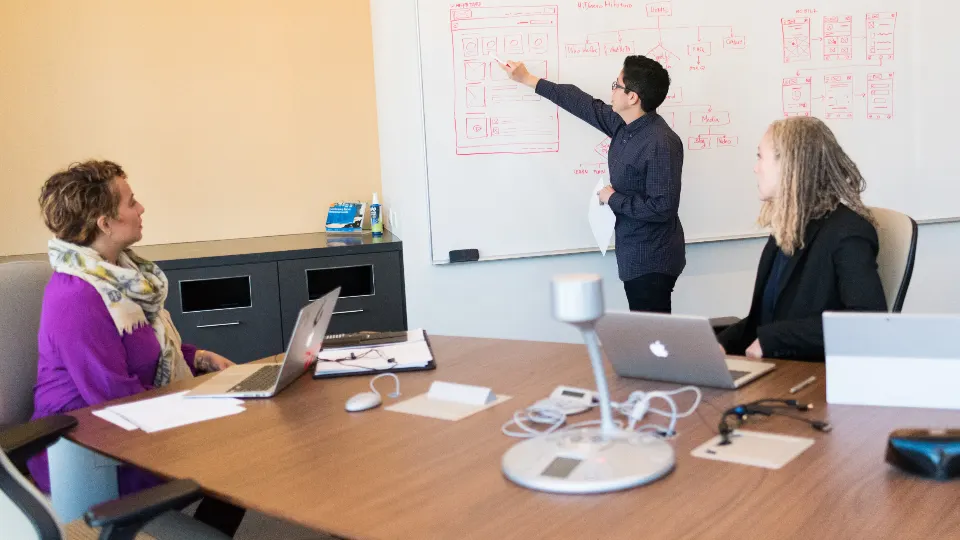
Photo: Direct Media / StockSnap (CC0)
Table of contents
International clients and managers rarely ask for technical detail. They want to know one thing: is the project safe? Many freelancers and engineers do the work well but struggle to give a project status update in English. The report becomes too long, too vague, or it arrives only after the problem has grown.
This article shows how to report progress to a client with a simple structure. You get ready sentences, a way to report a delay honestly, and one full spoken example and one full written example.
Five parts cover almost every update
You don't need a complex format. These five parts answer what a client wants to know:
- Done. What is finished.
- In progress. What you are working on now.
- Next. What comes after that.
- Risks. What could affect the schedule.
- What I need from you. What you need from the client.
This order works because the client hears good news first, then the plan, then what they must do. The last part is often forgotten. But it is where the client can help you stay on schedule.
Sentences for each part
Here are short sentences you can use right away.
Done
The login page is done and tested.
We finished the first version of the report page.
In progress
I am working on the export feature now.
The payment integration is in progress. I expect to finish it on Thursday.
Next
Next, I will test with your sample data.
After that, I will start on the admin page.
Risks
One risk: the API from your vendor is slow.
This may delay testing by two days.
What I need from you
I need a sample file with real data by Wednesday.
Could you confirm the design for the settings page?
Each sentence carries one piece of information. Short sentences are easier for a client to follow, especially on a video call. For more practice, read short sentences make answers clearer.
How to report a delay honestly
A delay is the hardest part. The rule is simple: say it early, give a short reason, and offer a new date. Don't wait until the deadline day.
A three-step pattern:
- State the fact.
- Give the reason, without blaming anyone.
- Offer a new date and what you can send first.
I need to share a delay. The report page will not be ready on Tuesday.
The reason is that the data format changed last week.
I can finish it by next Thursday. I can send the first part on Tuesday.
Give a date you can keep, not the date the client likes best. One correct new date is better than three missed ones. If you are not sure yet, say when you will confirm:
I can give you a firm date on Friday, after I check the data.
How to say "I don't know yet, I will check"
This sentence is safe and professional if it includes two things: what you will check, and when you will answer.
I don't know yet. I will check and reply by tomorrow noon.
I am not sure about that. Let me confirm with the team first.
I haven't tested that part yet. I will test it today and update you.
"I don't know" does not make you sound unprepared. What hurts is guessing and being wrong, or never coming back with an answer. For more on staying honest when you lack experience, see honest answers when you haven't done it.
Share bad news early
Bad news does not get better by waiting. Clients usually value an early warning more than a surprise on deadline day. Some calm openers:
I want to tell you early: we have a problem with the schedule.
I found an issue yesterday. Here is what it means for the plan.
I would rather tell you now than later.
After the opener, go straight to the facts, the impact, and the options. Don't apologize many times. One "sorry for the delay" is enough. Then focus on the solution.
Use numbers honestly
Numbers make a report clear, but only when they are real. Some practical rules:
- Use numbers you can show: tasks, pages, remaining bugs.
- Don't round up to sound further along.
- If it is an estimate, say it is an estimate.
| Weaker | Better |
|---|---|
| We are almost done. | Four of seven tasks are done. |
| It is about 90 percent finished. | The main flow works. Two bugs remain. |
| It will be fast. | The page loads in 2 seconds in my test. |
This is my estimate, not a promise. I will confirm after testing.
Spoken version: 30 to 45 seconds
In a stand-up or a video call, clients don't want a long report. This full example takes about 40 seconds at a calm pace:
Hi everyone. Here is a quick update on the dashboard project.
The login page and the report page are done.
I am working on the export feature now. Four of seven tasks are finished.
Next, I will test with your sample data.
One risk: some fields are missing in your data. This may delay testing by two days.
So the demo date moves from Tuesday to next Thursday.
I need one thing from you: a sample file with real data by Wednesday.
Any questions?
Notice the order: done, in progress, next, risks, needs. The new date comes right after the risk, so the client sees the impact at once.
Written version: 4 to 6 lines
For Slack or email, use short lines that are easy to scan. Example:
Subject: Dashboard project update
Done: login page and report page, both tested. In progress: export feature. Four of seven tasks are finished. Next: test with your sample data. Risk: some fields are missing in your data. Testing may take two more days. New demo date: next Thursday, instead of Tuesday. Need from you: a sample file with real data by Wednesday.
One line, one piece of information. The client can read it in ten seconds and knows exactly what to do. If a topic needs technical detail, see explaining technical trade-offs in English.
Common mistakes
- Too much technical detail. The client needs the impact on the schedule, not every function name.
- Vague words. "Almost done" or "soon" can't be measured. Use a number or a day.
- Delaying bad news. A small problem today becomes a big one next week.
- Not stating your needs. If you wait on the client, say so with a clear deadline.
- Too many apologies. One is enough. Show the plan instead.
Summary
A good status update is short and follows a pattern: done, in progress, next, risks, what I need from you. Report a delay early with a short reason and a new date. If you don't know, say "I don't know yet" and say when you will answer. Use numbers only when they are real. To prepare for calls with clients, also read freelance client calls and interviews.
Repartee is a Windows desktop app with a Meeting mode (Rapat) that listens to the meeting audio, shows the transcript with an Indonesian translation and the gist of the question, and drafts short English replies. The replies are based only on your own meeting notes and profile, never invent experience or progress, and you still speak in your own words.
Related articles
 English
6 min read
Daily Standup in English: Example Sentences You Can Use
Daily standup update example sentences for yesterday, today, and blockers, plus a fill-in template and three complete standups for non-native speakers.
 English
6 min read
English for Online Meetings with International Teams
A practical guide to English for online meetings: prepare, greet, ask people to repeat, speak up in short sentences, and close with clear action items.
 English
6 min read
Meeting Phrases in English: Interrupt, Agree, Disagree
Meeting phrases in English for interrupting, agreeing, and how to disagree politely, with short example sentences you can use in your next call.